Sunday, March 31, 2013

End of March

Some pics from the end of March.


 Med with Black-heads, Radipole carpark


Grass area at Osprey Quay, Portland


Mipit finding a grub


After playing it very casually, finally ended up at the Obs quarry late afternoon where my penalty for not going for the Bluethroat straight away was one brief view of its arse. 


Couldnt get down for the female bird later, but did get to Portland's third Bluethroat of the year. Got there in time for good views but this time just dipped on the sun which disappeared as I arrived and wasnt seen again that day.  As expected though, a cracking little bird.


A good camouflage (apart from the bright blue bit!)


In between the Bluethroat show, a few Chiffs were also putting on a good performance, although not that they would see it that way. Things have been tough for these birds since their arrival, being forced to forage at ground level for anything they can find.


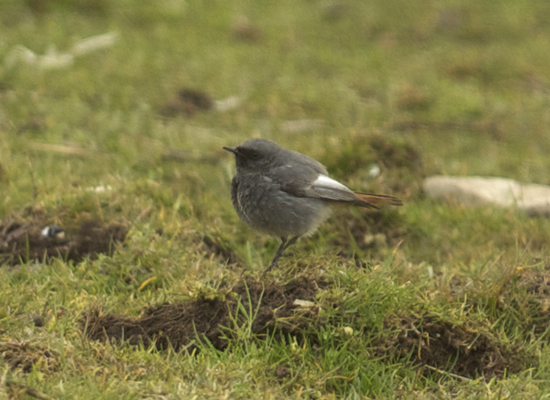
At least 4 Black Redstarts about in the neighbouring field,  including this lovely male. Very flighty birds though, never getting that close


Sparrowhawk in garden


Wednesday, February 27, 2013

All roads lead to Poole!

Birds from nearly all points of the compass descend on a square mile of Poole.


The southern representative came in the rather distinctive shape of a Hoopoe. Originally rubbished by some as a Fieldfare despite three independent reports of an orange bird with a crest! The bird finally gave itself up to a birder of sorts on a grassy verge outside a factory in the middle of Hamworthy.
Problem was it was doing what Hoopoes do best, being very mobile, and despite many people putting in many hours, initially only a few managed to connect.
The other problem was it was being rather mobile in some of the less desirable areas of Poole. Keeping on the move was the order of the day, not just to give yourself more chance of finding the bird but also to avoid having your wheels nicked.
Eventually everybody who had the time or wanted to see the bird badly enough did manage to track it down. Unfortunately I was not in that category (the time bit)

Meanwhile in a garden just up the road, reports were coming through of a possible Common Rosefinch visiting a garden feeder. Eventually the id was confirmed but the bird proved as difficult to see as the Hoopoe, mainly because the garden owner didnt want the location divulged. However it wasnt exactly plain sailing for a few friends that were invited in. And when I say in, I mean on a rickety bench overlooking the garden. Visits by the bird were very occasional and always brief.

Standing room only (on a '"at your own risk" bench)


View from said bench showing position of Rosefinch's favorite feeder


After nearly a couple of hours wait it finally turned up. I managed to get some shots through the foliage by using manual focus


Briefly visited a tree before departing


The next day I was out surveying at Holes Bay when I bumped into this.


Always a bird on the radar when visiting Holes Bay in the winter but this time searching through the flocks of Teal  (during quiet periods of survey work!) did yield the desired result. Also causing a mini twitch


Lastly and by no means leastly our 4th bird was just up the drain from here, to the culvert behind PC World. Now a nationally important site for Siberian Chiffchaffs! No time to get any photos as yet.
If we expand the square mile to include the rest of the Poole Harbour recording area we could have completed the compass sectors and had a couple of birds coming in from the north west on the map, with Whooper Swan and Pink-footed Goose recent visitors.


Sunday, January 20, 2013

I'm not doing a Poole Harbour year list but.....

Reading Peter Moore's blog the other day, I noticed that one of his New Years resolutions was to do more birding. Well, looking back at my blog for last year, I should also make a resolution: To do less!
But it is a hard thing to do.
The problem at the moment is every time I go out I keep bumping into really good birds for the harbour, things like Whooper, Pink-foot, Mandarin and Egyptian Goose which are all great yearlist birds. Not to mention stuff like Ruff and Golden Plover which in recent years have been few and far between.
Thing is, I cant do things half heartedly and when I list it all gets a bit serious, with most other obligations going out of the window.
So maybe not a good idea. Anyway some of that wildfowl could be a bit suspect... 
Scanning from Holme Bridge looking east down the valley there is a duck pen next to the river with lots of Mallard in it, put there by the shooters. The problem is, what else have they chucked in there? For instance I noticed that the Egyptian Goose and its friend were hanging around the perimeter fence the other day along with 5 Muscovy Duck. And how far has that Mandarin moved?


With last years photo yearlist consistently necessitating the use of some very poor images I am now totally relaxed about using completely shite photos for the blog!


Pink-foot. Even though it is consorting with Greylags I think we should give it the benefit of the doubt


Male Merlin being hassled by Jackdaw. Later seen tucking into a Blue Tit.


Lots and lots of snow put pay to planned survey work up t'north. On the plus side 20 Golden Plover over the house during the very big southerly movement of birds was a garden tick

Wytch Causeway, it was as cold as it looks


Not sure why there was a strip of exposed grass but a couple of Golden Plover and a few hundred  Fieldfare were making the most of it.


Barwits Shore Road


Confiding Dunlin


Thursday, January 17, 2013

Blackbird variety and 'variety'?

A cold snap in Dec 2010 brought an influx of Blackbirds into the garden. I was intrigued by the variety of plumages on show and began taking photos, eventually coming up with 18 identifiable individuals.
Some were fairly standard looking, but others were sporting all sorts of pale edgings and chevrons indicating birds from presumably a bit further afield. A little research into these birds occasionally brought up the word 'stockamsel'
This January with quite a few Blackbirds around, I have been having another look. Now that I dont have to charge around the country for photos I can spend more time doing other pointless and obscure things like this!
Stockamsel was apparently quite a popular term in the 60's but is not used at all nowadays. The name was first coined by the German Johann Andreas Naumann of thrush fame. He used the word for young males that resembled females. Not sure if there is an English name equivalent, but perhaps 'Ladyboy' would fit!

BWP has a picture of a 'stockamsel' and labels it a 'variety'. Unfortunately there is no mention of it in the text. Finding anything else out about stockamsels has proved quite difficult but it seems that the term has now been replaced by 'continental' Blackbird.

So far I have identified at least 15 Blackbirds coming to the garden,  including a few with noticeable pale edgings.

Bird 1


Bird 2


Bird 3


Bird 4
 Presumably a dark female or is it one of Naumann's Ladyboys!?


The next birds are rather more standard looking but can still be individually identified.

Bird 5
Almost adult, still got old primaries. Distinctive bill pattern.


Bird 6


Can be identified by white blob near base of upper mandible and some white blobs above eyering


Bird 7
A few more white blobs above eyering than bird 6, and what looks like dark bill markings (along with some mud)


Bird 8 
No white blobs and all yellow bill


Bird 9 
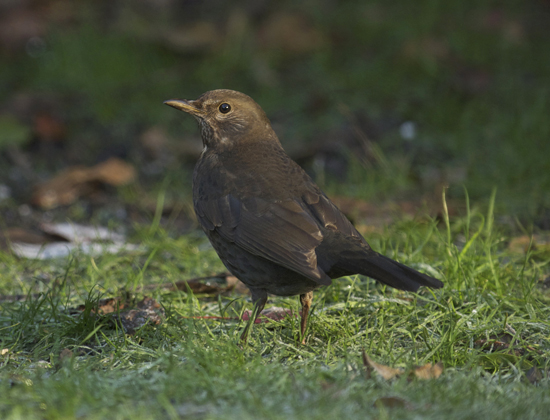
Moody first year female.


Bird 10
Adult male with dark area on upper mandible (If you are now scratching your chin and think there is some double counting going on here, I definitely saw at least 4 normal adult looking birds together so I can claim the numbers on that anyway!)


Bird 11
Another first year female, with a mixture of new and old greater coverts


Bird 12
Very thin and indistinct eyering. This bird only showed up yesterday. Taken in very low light levels but did show pale edged feathering.


Bird 13 
A few window reflections here


There were also 2 other obvious first winter males occasionally visiting, bringing the total to 15 individuals. Only did this lot in two sessions so there are probably also a few more birds kicking about.